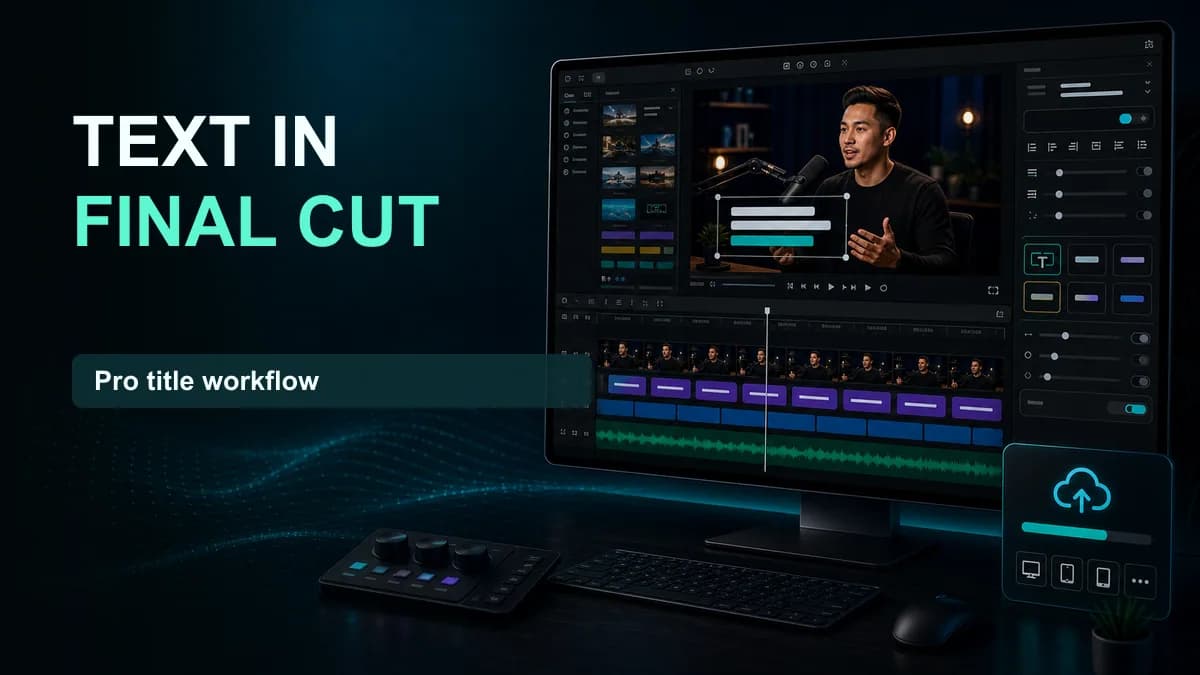













SNAPVID guide for editing workflows with hooks, readable captions, pacing, internal links, and clear publishing steps.
Use this page to answer the question quickly, understand the workflow behind it, and move into a useful SNAPVID next step without losing the creator's original intent.
Quick answer
- Main job: turn a rough clip into a finished short.
- First decision: define the viewer promise before editing.
- Editing check: captions, pacing, visual emphasis, and platform copy should support the same idea.
- SNAPVID next step: turn the advice into a hook, script, caption, export, or reusable publishing checklist.
Page workflow
| Layer | What this page covers | SNAPVID output |
|---|---|---|
| Search intent | How to add Text to Final Cut Pro - Step-by-step guide | A direct answer and a practical route forward |
| Structure | 13 main content sections plus FAQ/supporting links | Matching headings, lists, tables, and creator checkpoints |
| Action | turn a rough clip into a finished short | A short-form workflow with internal links and CTAs |
How Do You Add Text on Final Cut Pro?
How Do You Add Text on Final Cut Pro? turns the topic into a practical decision. For editors polishing clips for social feeds, use it to decide what the viewer should notice first, what should be removed, and how the final caption or CTA should guide the next action.
Practical checklist:
- Define the viewer promise before choosing the edit.
- Cut anything that does not help the first idea land faster.
- Review captions on mobile for timing, contrast, and line length.
- Match the title, description, hashtag set, and CTA to the same outcome.
- Use the result to turn a rough clip into a finished short instead of adding another disconnected tactic.
- Keep the final export easy to understand with sound off.
Step 1
Treat this section as an editing pass. Start with the viewer promise, keep the strongest details, and let SNAPVID support the idea with captions, pacing, and export-ready copy.
Practical checklist:
- Define the viewer promise before choosing the edit.
- Cut anything that does not help the first idea land faster.
- Review captions on mobile for timing, contrast, and line length.
- Match the title, description, hashtag set, and CTA to the same outcome.
- Use the result to turn a rough clip into a finished short instead of adding another disconnected tactic.
- Keep the final export easy to understand with sound off.
Step 2
This section exists to make it easier to turn a rough clip into a finished short. Convert the advice into a small checklist you can verify on a mobile preview before publishing.
Practical checklist:
- Define the viewer promise before choosing the edit.
- Cut anything that does not help the first idea land faster.
- Review captions on mobile for timing, contrast, and line length.
- Match the title, description, hashtag set, and CTA to the same outcome.
- Use the result to turn a rough clip into a finished short instead of adding another disconnected tactic.
- Keep the final export easy to understand with sound off.
Step 3
The useful output is not more theory; it is a clearer short. After this step, the hook, edit, captions, and publishing copy should feel aligned instead of stitched together at the last minute.
Practical checklist:
- Define the viewer promise before choosing the edit.
- Cut anything that does not help the first idea land faster.
- Review captions on mobile for timing, contrast, and line length.
- Match the title, description, hashtag set, and CTA to the same outcome.
- Use the result to turn a rough clip into a finished short instead of adding another disconnected tactic.
- Keep the final export easy to understand with sound off.
Step 4
Step 4 turns the topic into a practical decision. For editors polishing clips for social feeds, use it to decide what the viewer should notice first, what should be removed, and how the final caption or CTA should guide the next action.
Practical checklist:
- Define the viewer promise before choosing the edit.
- Cut anything that does not help the first idea land faster.
- Review captions on mobile for timing, contrast, and line length.
- Match the title, description, hashtag set, and CTA to the same outcome.
- Use the result to turn a rough clip into a finished short instead of adding another disconnected tactic.
- Keep the final export easy to understand with sound off.
Step 5
Treat this section as an editing pass. Start with the viewer promise, keep the strongest details, and let SNAPVID support the idea with captions, pacing, and export-ready copy.
Practical checklist:
- Define the viewer promise before choosing the edit.
- Cut anything that does not help the first idea land faster.
- Review captions on mobile for timing, contrast, and line length.
- Match the title, description, hashtag set, and CTA to the same outcome.
- Use the result to turn a rough clip into a finished short instead of adding another disconnected tactic.
- Keep the final export easy to understand with sound off.
How To Add Animated Text in Final Cut Pro
This section exists to make it easier to turn a rough clip into a finished short. Convert the advice into a small checklist you can verify on a mobile preview before publishing.
Practical checklist:
- Define the viewer promise before choosing the edit.
- Cut anything that does not help the first idea land faster.
- Review captions on mobile for timing, contrast, and line length.
- Match the title, description, hashtag set, and CTA to the same outcome.
- Use the result to turn a rough clip into a finished short instead of adding another disconnected tactic.
- Keep the final export easy to understand with sound off.
Useful SNAPVID paths from this section:
- creators like Alex Hormozi use these fancy animated texts
- Video Hook Generator
- Video Script Generator
- AI Video Idea Generator
How To Use Final Cut Pro X's "Installed Titles" Generator
The useful output is not more theory; it is a clearer short. After this step, the hook, edit, captions, and publishing copy should feel aligned instead of stitched together at the last minute.
Practical checklist:
- Define the viewer promise before choosing the edit.
- Cut anything that does not help the first idea land faster.
- Review captions on mobile for timing, contrast, and line length.
- Match the title, description, hashtag set, and CTA to the same outcome.
- Use the result to turn a rough clip into a finished short instead of adding another disconnected tactic.
- Keep the final export easy to understand with sound off.
Problems of Using Final Cut Pro to Add Text to Video:
Problems of Using Final Cut Pro to Add Text to Video turns the topic into a practical decision. For editors polishing clips for social feeds, use it to decide what the viewer should notice first, what should be removed, and how the final caption or CTA should guide the next action.
Practical checklist:
- Remove dead air and tighten the rhythm so every beat earns its place.
- Define the viewer promise before choosing the edit.
- Cut anything that does not help the first idea land faster.
- Review captions on mobile for timing, contrast, and line length.
- Match the title, description, hashtag set, and CTA to the same outcome.
- Use the result to turn a rough clip into a finished short instead of adding another disconnected tactic.
Final Cut X Alternative for Adding Text to Videos- SNAPVID
Treat this section as an editing pass. Start with the viewer promise, keep the strongest details, and let SNAPVID support the idea with captions, pacing, and export-ready copy.
Practical checklist:
- Remove dead air and tighten the rhythm so every beat earns its place.
- Generate captions, then review size, timing, and contrast on a phone-sized preview.
- Define the viewer promise before choosing the edit.
- Cut anything that does not help the first idea land faster.
- Review captions on mobile for timing, contrast, and line length.
- Match the title, description, hashtag set, and CTA to the same outcome.
How To Add Text/ Captions To Video Using SNAPVID
This section exists to make it easier to turn a rough clip into a finished short. Convert the advice into a small checklist you can verify on a mobile preview before publishing.
Practical checklist:
- Define the viewer promise before choosing the edit.
- Cut anything that does not help the first idea land faster.
- Review captions on mobile for timing, contrast, and line length.
- Match the title, description, hashtag set, and CTA to the same outcome.
- Use the result to turn a rough clip into a finished short instead of adding another disconnected tactic.
- Keep the final export easy to understand with sound off.
Useful SNAPVID paths from this section:
Step 1. Upload Your Video
The useful output is not more theory; it is a clearer short. After this step, the hook, edit, captions, and publishing copy should feel aligned instead of stitched together at the last minute.
Practical checklist:
- Define the viewer promise before choosing the edit.
- Cut anything that does not help the first idea land faster.
- Review captions on mobile for timing, contrast, and line length.
- Match the title, description, hashtag set, and CTA to the same outcome.
- Use the result to turn a rough clip into a finished short instead of adding another disconnected tactic.
- Keep the final export easy to understand with sound off.
Useful SNAPVID paths from this section:
Step 2. Generate Your Subtitles
Step 2. Generate Your Subtitles turns the topic into a practical decision. For editors polishing clips for social feeds, use it to decide what the viewer should notice first, what should be removed, and how the final caption or CTA should guide the next action.
Practical checklist:
- Define the viewer promise before choosing the edit.
- Cut anything that does not help the first idea land faster.
- Review captions on mobile for timing, contrast, and line length.
- Match the title, description, hashtag set, and CTA to the same outcome.
- Use the result to turn a rough clip into a finished short instead of adding another disconnected tactic.
- Keep the final export easy to understand with sound off.
SNAPVID bonus: SEO and production layer
| Bonus layer | Why it matters | How to use it |
|---|---|---|
| Internal linking | Helps readers move from research to action | Use the links below to generate hooks, captions, scripts, or platform copy |
| Mobile readability | Most short-form decisions happen on a small screen | Review captions, pacing, and CTA in a mobile preview before publishing |
| Repeatable workflow | One good page should create more than one good video | Save the checklist and reuse it for the next clip |
Internal SNAPVID links
- Blog
- How to Add Text to a Final Cut Pro
- how to add text to videos
- creators like Alex Hormozi use these fancy animated texts
- YouTube Shorts
- TikTok
- 12 secret tips to get high quality video uploads on TikTok
FAQ
How Do You Add Text on Final Cut Pro?
Start with one clear viewer promise, then use SNAPVID to align the hook, captions, edit, and publishing copy around that same promise.
What is high-ticket affiliate marketing?
Start with one clear viewer promise, then use SNAPVID to align the hook, captions, edit, and publishing copy around that same promise.
How to make shorts like Ali Abdaal?
Start with one clear viewer promise, then use SNAPVID to align the hook, captions, edit, and publishing copy around that same promise.